
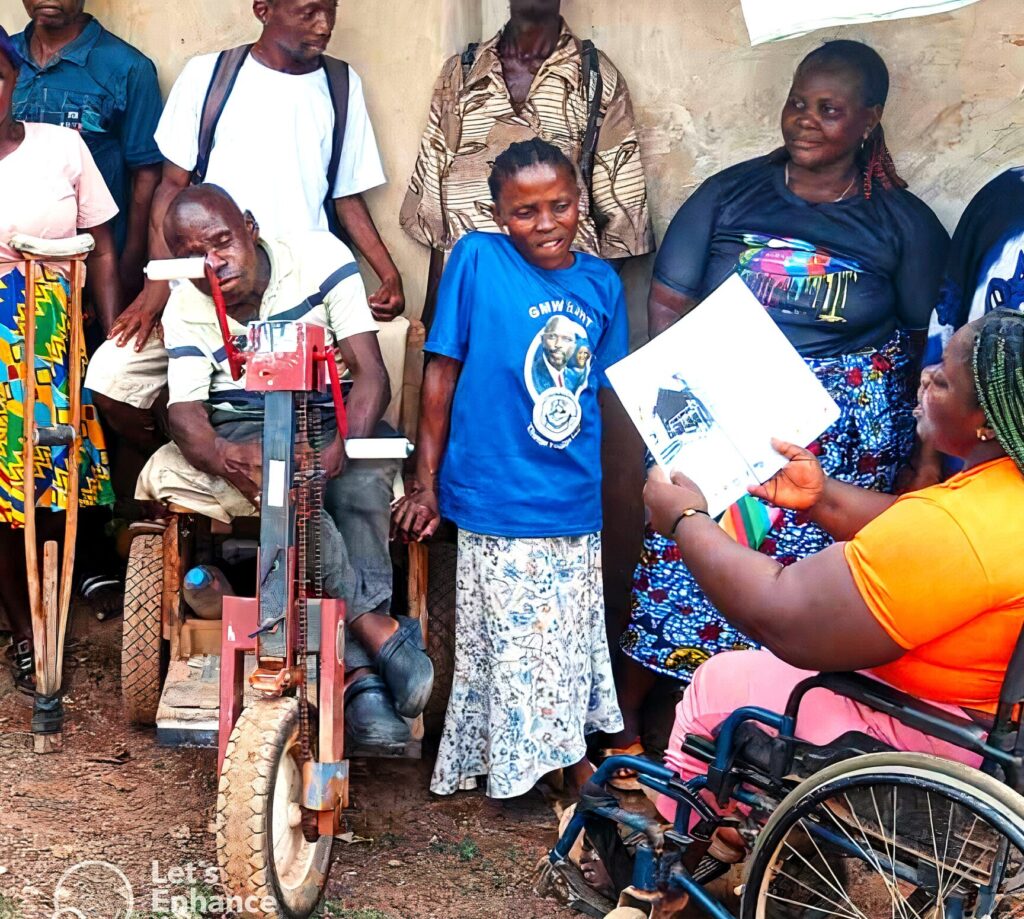
In March 2025, a remarkable initiative unfolded across five counties—Bomi, Bong, Lofa, Montserrado, and Nimba—engaging fifty dedicated Peer Educators in the important mission of educating others about Sexual and Reproductive Health Rights (SRHR). Over two weeks, these Peer Educators mobilized and supported discussions with fourteen participants each from their respective Disability People’s Organizations (DPOs), community groups, and the broader community, leading to an impressive outreach of 700 individuals. Among these participants, 259 were
males and 441 were females, with an overwhelming 95% identifying as persons with disabilities. The essence of these peer-led sessions was to create a welcoming and inclusive environment—one where individuals could openly share their experiences and discuss their SRHR needs. Under the guidance of AIFO community workers and coordinators from NUOD & NCD, these discussions blossomed into a vibrant community of support. Participants not only learned but also began to dismantle the myths and misconceptions surrounding the sexual health of people with disabilities.
One participant, Nancy Paye, Physically Challenged female, shared her transformative experience: “I did not know anything about what is referred to as sexual abuse, the myths and the truths. I am thankful to AIFO for making me aware of sexual abuse. I always thought that when I’m tired of having sex, I had no right to say no. But this session has taught me that I have the right to say no and to report any violence against me. I will educate my husband and friends on this topic.”
This sentiment echoes the broader impact of the SRHR components of the CAD-L project. The peer-to-peer sessions have not only offered information but also empowered individuals to advocate for their rights and seek necessary healthcare services, including family planning options.
The topics discussed—a range that spanned from the types of family planning available and their advantages and disadvantages, to understanding STI prevention and recognizing sexual abuse—opened vital doors to knowledge. More importantly, they helped participants foster a stronger sense of community.
As we reflect on this initiative, it’s clear that these sessions have provided a crucial platform for dialogue and education, equipping individuals with the tools they need to understand their rights and navigate their health decisions confidently.
Together, we are breaking barriers, fostering understanding, and building a community that stands strong in its voice and rights. Let us continue to champion the power of knowledge and support, ensuring that everyone, regardless of their abilities, has the information they need to live empowered and informed lives



 Total Users : 186852